The Fertility Diet in India: Foods That Support Conception
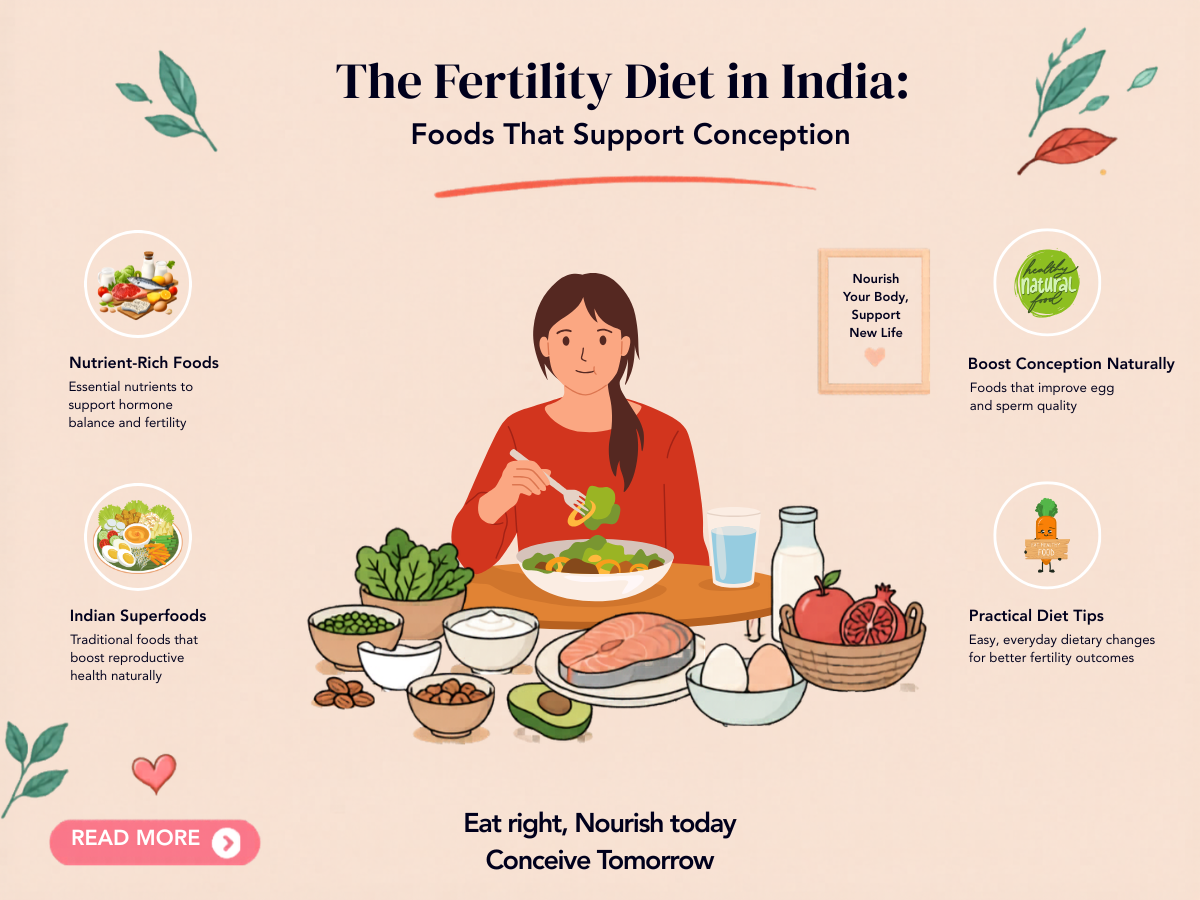
The relationship between diet and fertility is real — supported by multiple large epidemiological studies, animal model experiments, and a growing body of clinical evidence. Diet influences hormonal balance, ovulatory function, sperm quality, egg quality, implantation, and early pregnancy maintenance. The good news for Indian couples is that the traditional Indian diet — at its best — is actually very well aligned with evidence-based fertility nutrition. The challenge is that modern urban Indian diets have drifted significantly from this foundation.
This guide focuses on the evidence-based dietary patterns and specific foods that support fertility in both women and men — presented in the practical context of Indian eating.
The Fertility Diet: Overall Patterns
The strongest evidence for diet and fertility comes from two large Harvard Nurses' Health studies (Chavarro et al.) that identified a "fertility diet" pattern in women with ovulatory infertility:
- Higher consumption of monounsaturated and polyunsaturated fats (lower saturated and trans fats)
- Higher plant protein consumption, lower animal protein
- Higher full-fat dairy, lower low-fat dairy
- Lower glycaemic load (less refined carbohydrate, more whole grains and legumes)
- Higher micronutrient intake — particularly iron, zinc, folate, and vitamin D
This pattern corresponds closely to a Mediterranean-style diet — and traditional South Indian, Punjabi, and Maharashtrian cuisine, when made with whole ingredients and traditional cooking methods, shares many of these characteristics. The drift toward fast food, refined flour (maida), bottled cooking oil, sugary beverages, and processed snacks in urban India is the dietary shift most correlated with declining fertility outcomes.
Fertility-Supporting Foods in the Indian Context
Legumes and Pulses — The Fertility Foundation
Dals, rajma, chana, moong, masoor — legumes are the most fertility-supportive food group in the Indian diet. They provide:
- Plant protein — associated with better ovulatory function than animal protein in the Harvard studies
- Folate — essential for preventing neural tube defects and supporting DNA integrity in both eggs and sperm
- Iron (non-haem) — with excellent absorption when eaten with vitamin C (lemon juice over dal significantly improves iron absorption)
- Low glycaemic index carbohydrates — supporting insulin sensitivity, particularly important for PCOS
- Zinc — important for sperm morphology and testosterone production
Aim for at least one dal or legume-based dish daily.
Vegetables — Especially Leafy Greens
Palak (spinach), methi (fenugreek leaves), moringa (drumstick leaves), broccoli, and cauliflower provide folate, vitamin C, antioxidants, fibre, and iron. Moringa in particular has exceptionally high micronutrient density. Include 2 to 3 servings of vegetables daily, with at least one serving of dark leafy greens.
Nuts and Seeds
Walnuts (omega-3 fatty acids — strongly associated with improved sperm morphology and motility), almonds (vitamin E, zinc), flaxseeds (omega-3, lignans), pumpkin seeds (zinc, selenium). A small handful of mixed nuts and seeds daily provides the fat-soluble micronutrients critical for both egg and sperm health.
Oily Fish
For non-vegetarians, fatty fish — mackerel (bangda), sardines (pedvey), and salmon — are the richest dietary sources of omega-3 DHA and EPA. DHA is a key structural component of sperm membranes and is associated with improved sperm motility and morphology. 2 to 3 servings of oily fish per week is the evidence-based target. Avoid large predatory fish (shark, swordfish, tuna in excess) due to mercury content — particularly relevant in pregnancy planning.
Full-Fat Dairy
The counterintuitive finding from the Harvard Nurses' Health study: full-fat dairy (whole milk, paneer, dahi) was associated with better fertility outcomes; low-fat dairy was associated with worse outcomes in the ovulatory infertility population. The proposed mechanism: full-fat dairy contains androgens that support follicle development; processing to remove fat also removes these compounds and concentrates IGF-1 in ways that may be androgenic in other directions. Moderate full-fat dairy (2 to 3 servings per day) rather than excessive low-fat dairy.
Tomatoes — Lycopene for Male Fertility
Cooked tomatoes are among the richest dietary sources of lycopene — the antioxidant associated with improved sperm morphology. Importantly, cooking tomatoes in oil significantly increases lycopene bioavailability compared to raw tomatoes. Rasam, tomato dal, and tomato-based sabzis are therefore genuinely fertility-supporting for the male partner.
What to Reduce
- Trans fats: Found in vanaspati, dalda, commercially fried foods, biscuits, and many packaged snacks. Associated with impaired ovulation and inflammation.
- Refined carbohydrates in excess: White rice in large portions, maida products, sugary beverages. Particularly relevant for PCOS — these drive insulin spikes that worsen hormonal imbalance.
- Processed meat: Associated with lower sperm quality in multiple studies.
- Excess caffeine: Above 200 mg/day (roughly 1 to 2 cups of filtered coffee) is associated with modestly increased miscarriage risk. Not "forbidden" in reasonable amounts — but moderation is appropriate when actively trying to conceive.
- Alcohol: Avoid or minimise when actively trying to conceive — both for egg and sperm quality reasons.
Frequently Asked Questions
Q1. Should I go completely organic for better fertility?
The evidence for organic food and fertility is limited. While pesticide exposure is a plausible concern for reproductive health, the practical impact of choosing organic over conventional produce — when both are washed appropriately — is not clearly established. Prioritising the quality and diversity of your diet (more vegetables, legumes, whole grains, nuts) is more evidence-based than spending significantly more on organic certification alone.
Q2. Can the right diet compensate for a significant fertility problem like low AMH or tubal blockage?
No — diet cannot reverse structural fertility problems (blocked tubes, significant uterine abnormalities) or compensate for severely diminished reserve. What diet can do is support the overall hormonal and cellular environment — improving egg and sperm quality, supporting insulin sensitivity in PCOS, providing the micronutrients needed for healthy embryo development, and reducing oxidative stress. Think of dietary optimisation as removing obstacles, not replacing medical treatment.
DISCLAIMER: This article is for educational purposes only. Regenerative approaches in reproductive medicine are largely adjunctive and some remain investigational. Consult Dr. Sunita Tandulwadkar or a qualified specialist for personalised guidance. Solo Clinic IVF & ObGyn, Pune.