
Sleep and Fertility: The Overlooked Factor in Conception
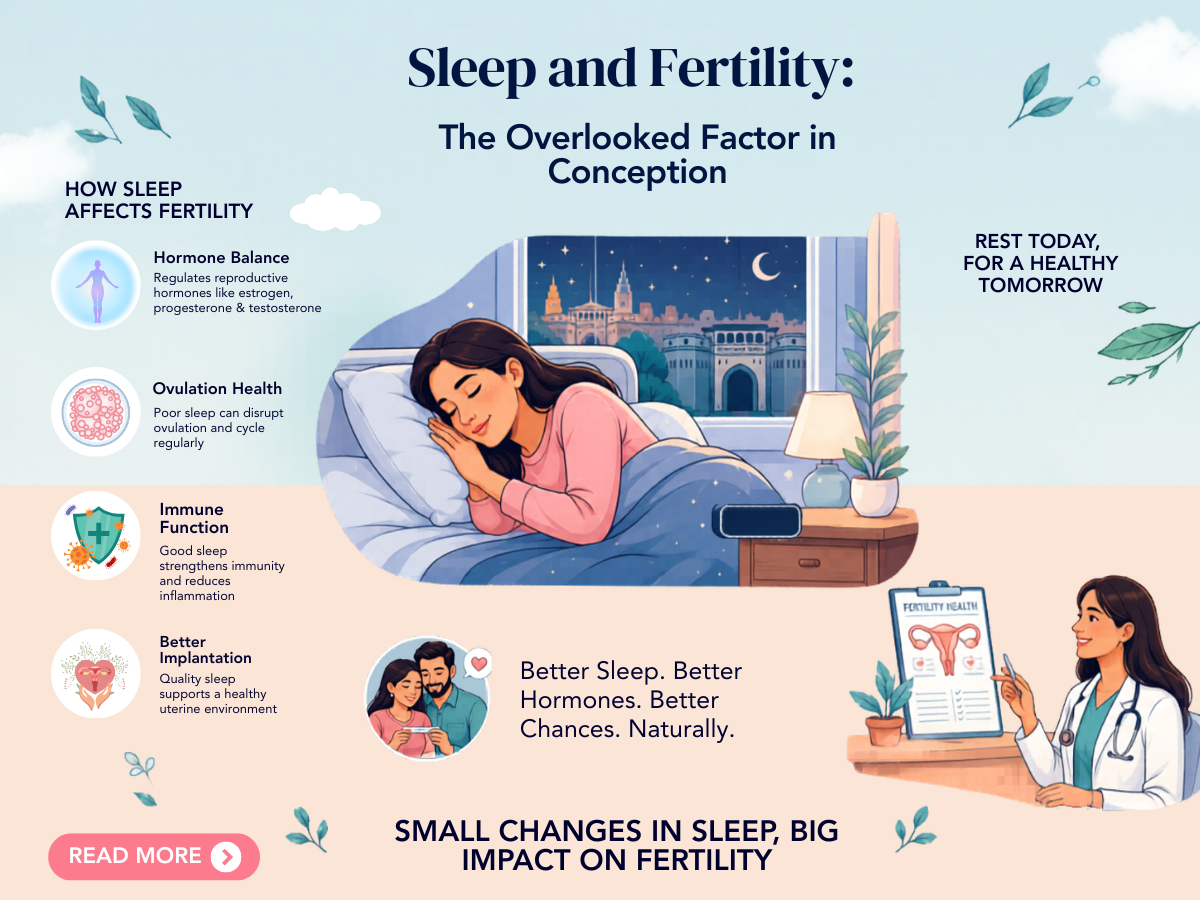
Sleep is the most fundamental biological restoration process — yet it is almost never discussed in fertility consultations. When couples ask what they can do to improve their chances of conception, they receive advice about diet, supplements, stopping smoking, reducing alcohol. Sleep rarely comes up. And yet the scientific evidence connecting sleep quality and duration to reproductive hormone regulation, ovulatory function, sperm quality, and IVF outcomes is substantial and growing.
This guide explains the biological connections between sleep and fertility, identifies which aspects of sleep matter most, and provides practical, evidence-based strategies for improving sleep quality in the context of fertility treatment.
How Sleep Regulates Reproductive Hormones
Reproductive hormone secretion is not constant throughout the day — it follows circadian rhythms. The hypothalamic-pituitary-gonadal axis — the hormonal cascade that regulates ovulation and sperm production — is directly influenced by the circadian clock system:
- GnRH pulses from the hypothalamus are most active during the late sleep period and early morning. Sleep disruption disrupts this pulsatile pattern, impairing LH and FSH release.
- The LH surge that triggers ovulation is particularly sensitive to circadian timing — shift work and irregular sleep schedules are associated with disrupted LH surges and delayed or absent ovulation.
- Prolactin is secreted primarily during sleep — sleep deprivation can cause modest elevations of prolactin that are sufficient to disrupt ovulatory cycles.
- Testosterone in men is primarily produced during sleep — particularly during REM sleep. Chronic sleep restriction significantly reduces morning testosterone levels.
Melatonin: The Sleep Hormone with Fertility Implications
Melatonin — the hormone that regulates sleep-wake cycles — has fertility implications that extend far beyond its role as a sleep signal. Melatonin is produced not only by the pineal gland but also within the follicular fluid that surrounds developing eggs in the ovary. Within the follicle, melatonin acts as a potent antioxidant — scavenging the reactive oxygen species generated during follicle development and protecting the egg's mitochondria and DNA from oxidative damage.
Research findings:
- Follicular fluid melatonin concentrations are positively correlated with egg quality and embryo development in IVF cycles.
- Women who supplement with melatonin (3 mg at bedtime) before IVF cycles have shown improvements in fertilisation rates and blastocyst development in controlled studies — particularly in women over 35 where follicular melatonin levels are naturally lower.
- Night shift workers — who have chronically disrupted melatonin patterns from light exposure during sleep hours — have significantly higher rates of menstrual irregularity, ovulatory dysfunction, and reduced fertility.
Shift Work, Night Shifts, and Fertility
Shift work — particularly rotating shifts and night work — is one of the most clearly documented lifestyle disruptors of reproductive health. The evidence includes:
- Women working night shifts have 30 to 40% higher rates of menstrual cycle irregularity than day workers.
- Night shift workers have elevated rates of early pregnancy loss.
- Male shift workers show significantly impaired semen parameters compared to day workers — particularly reduced sperm concentration and motility.
- IVF success rates are reduced in women and men who work night shifts, independent of other lifestyle factors.
The mechanism is multi-factorial: disrupted melatonin production, disrupted GnRH pulsatility, elevated cortisol from sleep deprivation, and disrupted insulin sensitivity. For couples undergoing IVF, if shift work is unavoidable, strategies to protect circadian rhythm (light management, melatonin supplementation, consistent sleep scheduling even on off days) can partially mitigate the effect.
Sleep Duration and Quality
Both inadequate sleep (below 7 hours per night) and excessive sleep (above 9 hours) are associated with worse reproductive outcomes in epidemiological studies — the "sweet spot" for fertility is 7 to 9 hours of quality sleep per night.
Sleep quality — not just duration — matters. Specific sleep disorders relevant to fertility:
- Obstructive sleep apnoea (OSA): Associated with reduced testosterone in men, impaired LH pulsatility in women, insulin resistance, elevated cortisol, and elevated inflammatory markers — all of which impair fertility. OSA is significantly more common in women with PCOS and in obese men. Treating OSA (with CPAP) improves testosterone levels in men and may improve cycle regularity in women.
- Insomnia: Chronic difficulty falling or staying asleep maintains elevated cortisol and disrupts the nocturnal GnRH pulse pattern. CBT for insomnia (CBT-I) — not sleeping medication — is the most effective evidence-based treatment for chronic insomnia.
Practical Sleep Optimisation for Fertility Patients
- Maintain a consistent sleep schedule: Same bedtime and wake time every day, including weekends. The circadian clock requires consistency — irregular schedules fragment the melatonin and hormonal patterns that support reproductive function.
- Protect the sleep environment: Dark (blackout curtains or a sleep mask), cool (18 to 20°C), and quiet. Even low-level light exposure during sleep disrupts melatonin production.
- Limit screen time before bed: Blue light from phones and screens suppresses melatonin. Avoid screens for 30 to 60 minutes before intended sleep time.
- Avoid caffeine after 2 pm: Caffeine has a half-life of 5 to 7 hours — a coffee at 4 pm still has half its caffeine effect at 9 pm.
- Consider melatonin supplementation: 1 to 3 mg of melatonin at bedtime has evidence for improving egg quality in IVF cycles (particularly for women over 35 or poor responders) and for resetting disrupted circadian patterns in shift workers.
- Address sleep disorders: Screen for OSA if you snore, have daytime sleepiness, or wake unrefreshed. Treat insomnia with CBT-I rather than sleeping medications (which suppress REM sleep and are not recommended periconceptionally).
Frequently Asked Questions
Q1. I typically sleep 6 hours a night due to work. Is this significantly affecting my fertility?
Chronic sleep restriction below 7 hours is associated with elevated cortisol, reduced reproductive hormone pulsatility, and reduced melatonin — all of which can impair fertility. It is not a dramatic, acute impairment (unlike a structural fertility problem), but it is a real, modifiable background factor. Even modest improvements — from 6 to 7 to 7.5 hours — through sleep schedule adjustment, earlier bedtime, and sleep hygiene improvements can partially restore the hormonal benefits of adequate sleep.
Q2. Should I take melatonin supplements while doing IVF?
Melatonin supplementation (1 to 3 mg at bedtime) has reasonable evidence for improving egg quality in IVF — particularly in women over 35 or with poor embryo development history. It is generally safe in the doses described. It should be used during the IVF preparation period and stopped once a positive pregnancy test is confirmed (high-dose melatonin has not been well studied in pregnancy). Discuss with your IVF team before adding any supplement to your protocol.
Q3. I work night shifts. Should I stop working nights before IVF?
If it is possible to transition to day shifts for 2 to 3 months before an IVF cycle, this is worth doing — the improvement in hormonal regularity and melatonin patterns during this period may meaningfully improve ovarian response and egg quality. If shift work is unavoidable, implementing rigorous sleep hygiene on off days, using melatonin supplementation, and wearing light-blocking glasses during post-night-shift morning commuting can partially protect the circadian clock.
DISCLAIMER: This article is for educational purposes only. Regenerative approaches in reproductive medicine are largely adjunctive and some remain investigational. Consult Dr. Sunita Tandulwadkar or a qualified specialist for personalised guidance. Solo Clinic IVF & ObGyn, Pune